Your professional coaching profile online is the first thing a potential client sees before deciding whether to book. It takes about 10 seconds for someone to form an impression of your page, and most visitors leave without ever scrolling past the top.
This guide covers everything that goes into a coaching profile that actually converts: how to write a bio that connects, what photos work, how to present your services and pricing clearly, how to collect and display testimonials, and how to optimize the whole thing so the right people find you on Google.
Why Your Coaching Profile Matters More Than You Think
Coaches often treat their online profile as an afterthought. They spend time perfecting their methodology, building their coaching framework, and practicing their technique. Then they throw up a booking page with a generic bio and wonder why no one is booking.
Your coaching profile is doing sales work for you 24 hours a day. When someone Googles "career coach for engineers" or clicks a link in your Instagram bio, your profile is having the first conversation with that person. It either builds enough trust to get a booking, or it doesn't.
The good news: a well-built coaching profile is not complicated. It requires clarity about who you help and why, the right visual elements, and a booking experience that doesn't get in the way. Let's build it.
Build your coaching profile in 30 minutes
Talkspresso handles your bio, services, scheduling, video calls, and payments in one page. No stitching together 5 different tools.
Start With Your Positioning, Not Your Bio
The most common mistake coaches make is writing a profile that's about them. Your bio, your credentials, your story. But a client landing on your page has one question: "Can this person help me with my problem?"
Before you write a single word of your profile, answer these three questions:
-
Who do you serve specifically? Not "ambitious professionals" or "people who want more." Try "mid-career engineers moving into management" or "freelance designers who want to hit their first $10K month."
-
What is the core problem you solve? The more specific and emotionally resonant, the better. "Feeling stuck in your career" is vague. "Getting passed over for promotions despite being the most qualified person in the room" is something a person feels in their chest.
-
What does the outcome look like? Articulate success in concrete terms. Not "you'll feel more confident" but "you'll have a clear promotion plan, the skills to make your case, and a timeline to get there."
Once you can answer these three questions clearly, your profile writes itself. Every section is just communicating those answers in different ways.
Writing a Bio That Builds Trust
Your bio has two jobs: establish credibility and create connection. Most coaching bios fail at both because they read like a LinkedIn resume written in third person.
The Structure That Works
Lead with the client, not yourself. Your first sentence should describe the problem your clients face, not who you are. Compare:
Weak: "Hi, I'm Sarah. I've been a career coach for 7 years helping professionals reach their goals."
Strong: "If you're a high performer who keeps getting overlooked for promotions, I can help you change that."
The second version immediately signals to the right person that this profile is for them.
Establish credibility without bragging. After you've connected with the reader's problem, you have permission to explain why you're the right person to help. This is where credentials, experience, and results belong. But frame them in terms of what they mean for the client. "I spent 10 years in corporate HR" is less compelling than "I spent 10 years in corporate HR, which means I know exactly what promotion committees are looking for."
Include a personal element. Coaching is an intimate relationship. Clients want to work with a human being, not a service provider. Share something real. Your own experience with the problem you now help others solve. A personal value that shapes how you coach. Something specific about your approach. This is what separates a coaching profile from a resume.
Keep it short. Your bio does not need to be a life story. Three to four paragraphs is plenty. If someone is still reading at the end, give them a call to action (book a discovery call, explore your services), not more text.
Bio Length and Format
For a coaching profile, 200 to 400 words is the sweet spot. Long enough to establish credibility and personality, short enough to hold attention. Break it into short paragraphs. No paragraph should exceed four lines. White space makes bios more readable and signals that you communicate clearly.
Write in first person. "I help" and "my approach" are more personal and direct than "Sarah helps" or "her approach."
Getting Your Professional Photo Right
Your headshot is doing more persuasion work than almost any text on your profile. People form judgments from photos in milliseconds, and a low-quality or mismatched photo undermines everything else on the page.
What Makes a Good Coaching Headshot
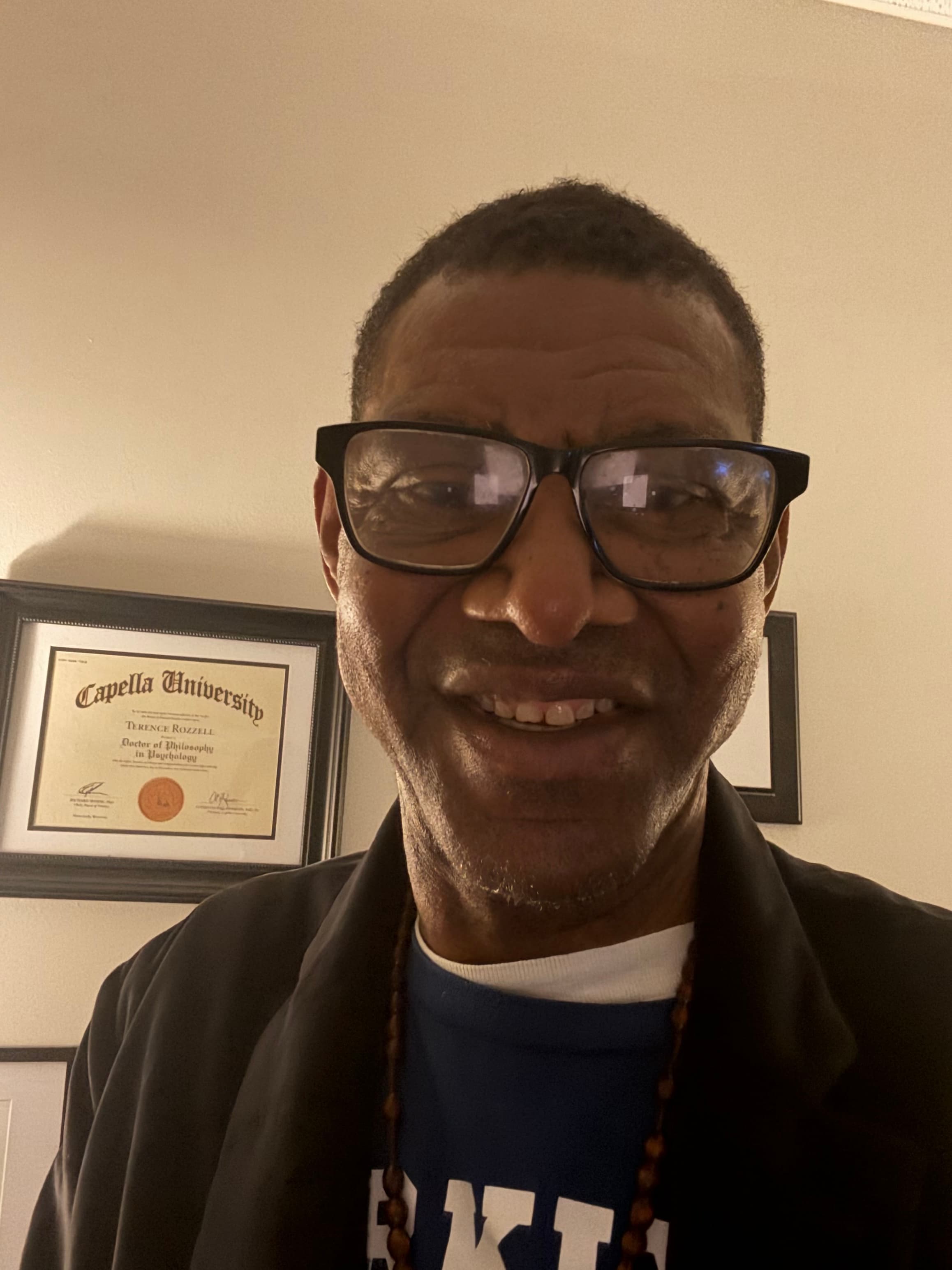
Professional but approachable. Coaching is a relationship business. A stiff, corporate headshot signals formality when most clients want connection. A casual selfie signals that you don't take your business seriously. Find the middle ground: a natural smile, direct eye contact with the camera, and clean background.
Consistent with your niche. Your photo should match the energy of your coaching. An executive coach who works with Fortune 500 leaders should look polished and authoritative. A creative coach or wellness coach can afford to look more relaxed and personable. The outfit, setting, and expression should all feel coherent with who your clients are.
High resolution. A blurry or pixelated photo immediately signals amateur. You don't need a professional photographer, but you do need good lighting and a camera that produces sharp images. Natural light near a window and a plain wall as background work fine.
Cropped to show your face. Profiles display your headshot in a small circle or square. A full-body photo means your face becomes tiny. Frame the shot from mid-chest up, with your face occupying most of the frame.
Secondary Photos
Beyond your headshot, consider including a photo of you in a coaching context: a screenshot from a video call, a moment captured in a workshop you led, or you at work. These reinforce that you do what you say you do and make your profile feel less like a static brochure.
Presenting Your Services and Pricing
This is the section where most coaches leave money on the table. Vague service descriptions, missing prices, or too many options all create friction that kills conversions.
The Right Number of Services
Offer two to three services, maximum. Decision paralysis is real. When someone sees six different options, they often pick none. A well-structured service menu looks like:
- Discovery Call (30 minutes): Low-commitment entry point, lower price, lets the client try before committing to ongoing coaching.
- Standard Session (60 minutes): Your core offer.
- Session Package (4 sessions): For clients ready to commit to ongoing work.
You can add a workshop or group session once you have them available. But for most coaches, especially early on, three options are plenty.
Writing Service Descriptions That Sell
Each service needs a title, duration, price, and a description that tells the client what they'll walk away with. The description should be outcome-focused. Not "We'll discuss your career challenges" but "You'll leave with a concrete next step, a clear picture of what's blocking you, and an action plan you can start implementing the same week."
Keep service descriptions short: three to five sentences is enough. The goal is to give the client enough information to feel confident booking, not to explain your entire process.
Should You Display Your Prices?
Yes. Hiding your prices doesn't filter for serious clients. It filters for busy clients who don't have time to reach out and ask. Transparent pricing is a trust signal: it says you're clear about your value and you're not trying to negotiate with each person individually.
If you offer custom pricing for corporate engagements or long-term contracts, you can have a contact form for those. But your standard services should have visible prices.
Intake Questions
Adding 2-3 pre-booking intake questions is one of the highest-leverage things you can do for your coaching practice. It prepares you for the session (so you spend more time coaching and less time collecting context), and it signals to the client that you take this seriously.
Good intake questions:
- What's the main challenge you're facing right now?
- What have you already tried?
- What would success look like after our session?
On Talkspresso, you can add intake questions directly to each service. Clients answer them when they book, and you receive the answers before the session. No extra emails, no follow-up required.
Collecting and Displaying Testimonials
Testimonials are the most powerful element of a professional coaching profile online. A single genuine testimonial from a real client outperforms any amount of copy you could write about yourself.
How to Get Testimonials
Ask immediately after a successful session. The best moment to request a testimonial is when the client is still feeling the value. Right after a session where something clicked, send a brief message: "I'm so glad that was helpful. If you have a few minutes, would you be willing to write a quick testimonial? It doesn't have to be long, just what you got out of our work together."
Make it easy. The harder you make the testimonial process, the fewer you'll collect. Talkspresso has a built-in testimonial request feature: you send a request, the client receives a link, they write their testimonial, and it automatically appears on your profile after your approval. One button, done.
Offer a prompt. Many clients are happy to write a testimonial but don't know what to say. Give them a prompt: "If you could briefly describe what you were dealing with before we worked together, what changed, and what you'd say to someone considering booking a session, that would be perfect."
What Makes a Good Testimonial
The best testimonials are specific. "Sarah is amazing!" is nice but doesn't tell a prospect anything actionable. "Before working with Sarah, I'd been applying for VP roles for two years with no luck. After three sessions, I had a completely different approach to my interviews and got two offers within six months" is a testimonial that converts.
When you receive testimonials, look for ones that:
- Mention a specific problem the client had before
- Describe a tangible outcome or change
- Include enough detail that it sounds real, not generic
Where to Display Testimonials
Place at least one testimonial near the top of your profile, visible without scrolling. This is prime real estate. A single strong testimonial here validates everything you wrote in your bio.
Group additional testimonials in a dedicated section lower on the page. Display them as quoted text with the client's name and photo if available. Three to five testimonials is better than ten: a focused set of strong ones is more credible than a wall of generic praise.
SEO: Getting Found by the Right Clients
A great coaching profile that no one can find is not doing its job. Search engine optimization for coaches is simpler than it sounds, and the basics are well within reach for any non-technical person. For the full playbook on ranking your coaching business, see our complete guide to SEO for coaches: how to get found on Google.
Your Profile Headline and Bio
Google reads your profile like a document. The text on your page determines which searches you show up for. This means your bio and service descriptions should include the phrases your ideal clients actually search for.
If you're a career coach for engineers, the phrase "career coach for engineers" should appear naturally in your bio, not stuffed awkwardly, but woven into how you describe what you do.
Common search intent categories for coaching profiles:
- Service + niche: "executive coach for women," "business coach for freelancers"
- Problem-based: "help getting promoted," "career change coach"
- Location + service: "career coach New York," "online life coach"
You don't need to optimize for all of these. Pick the two or three that best describe your ideal client and make sure they appear naturally in your bio and service descriptions.
Your Profile Page Title and URL
When you set up your coaching profile on a platform, your page title and URL should include your name and your primary niche keyword. For example, a URL like talkspresso.com/sarah-johnson is fine, but talkspresso.com/sarah-johnson-career-coach-engineers signals to search engines what your page is about.
Your page title (the text that appears in browser tabs and Google search results) should follow this format: "[Your Name] | [Coaching Niche] | [Location or Online]"
Google Business Profile
If you serve local clients or want to show up in local searches, claim your Google Business Profile. It's free and it's one of the strongest local SEO signals available. Add your coaching category, your booking link, a few photos, and as many reviews as you can collect.
Your Social Profiles Should Point to Your Booking Page
Every social media bio, every email signature, every forum profile should have one link: your booking page. Not your website homepage, not your LinkedIn profile. The direct link where someone can book a session. Every extra click you make someone take is a conversion you're losing.
Talkspresso gives every coach a public booking page at a clean URL (talkspresso.com/yourname) that you can share everywhere. Your Instagram bio link, your Twitter/X profile, your email signature. One link that handles everything: bio, services, pricing, booking, and payment.
Putting It Together on Talkspresso
If you're building a professional coaching profile online, you want a platform that handles everything in one place: your bio and photo, your services with pricing, intake questions, testimonials, video calls, and payment. Rebuilding this with five separate tools is possible but time-consuming and creates a worse experience for your clients.
Talkspresso is built specifically for coaches and creators who want to offer paid sessions without the operational overhead. Your profile page includes:
- Expert bio and photo displayed prominently
- Service listings with descriptions, duration, and pricing
- Intake questions attached to each service (answered at booking)
- Testimonials section with a built-in request and approval system
- Calendar availability synced to your schedule
- Integrated video calls that launch from the booking confirmation
- Automated payments via Stripe (no separate invoicing needed)
- Session recordings and AI summaries generated after each call
The full setup takes under 30 minutes, and everything is in one place for both you and your clients. No Calendly + Zoom + Stripe + separate website. Just your profile, your booking link, and your coaching.
Set up your professional coaching profile on Talkspresso today.
A Pre-Launch Checklist for Your Coaching Profile
Before you share your profile link anywhere, go through this checklist:
Bio and positioning:
- First sentence addresses the client's problem, not your credentials
- Credibility is established with specific experience or results
- Personal element makes you feel like a real person
- 200 to 400 words, short paragraphs, first person voice
Photo:
- High resolution, clearly shows your face
- Professional but approachable, matches your coaching niche
- Good lighting, clean background
Services and pricing:
- 2-3 services maximum
- Each service has a title, duration, price, and outcome-focused description
- Prices are visible
- Intake questions attached to each service
Testimonials:
- At least one testimonial visible near the top
- Testimonials are specific (describe a problem and outcome)
- Client names and photos included where available
SEO:
- Bio includes your niche keywords naturally
- Page title includes your name and niche
- All social bios link to your booking page
Booking experience:
- Calendar availability is accurate and up to date
- Payment processing is connected and tested
- You've done a test booking yourself to verify the full flow
The Profile Is the Foundation, Not the Finish Line
A professional coaching profile online is the foundation of your coaching business, not the final product. Once it's live, the work shifts to bringing people to it: consistent content, referral conversations, and direct outreach.
But you can't shortcut the foundation. A strong profile turns traffic into bookings. A weak profile wastes every marketing effort you make. Get the profile right first, then drive traffic to it.
Your first version does not need to be perfect. It needs to be clear about who you help, what problem you solve, and what to do next. You can refine everything else as you learn more about what your clients respond to.
Start with that clarity, build it on a platform that removes operational friction, and you'll have a profile that works for you every time someone lands on your page.
See the full feature breakdown on Talkspresso for Coaches, or read our step-by-step guide for creators selling paid video calls.
Your profile is your best salesperson. Make it work.
Set up your professional coaching profile on Talkspresso. Bio, services, scheduling, video, payments, and testimonials in one place.
Start FreeFree to join. No credit card required.